Sometimes, a brand name is also its identity and its promise.
In April 2026, Walmart announced a rebranding of its private-label, Great Value, a strategic shift that covers nearly 10,000 products across various categories.
In most cases, private-labels behave like non-brands or functional brands, because they lean on their parent brand for perceived quality, perceived value, and differentiation. In many cases, a private-label brand won’t even have an independent name; it is simply named after the parent brand. Moreover, it’s rare to find a private-label with its own independent brand strategy (such as a brand story or brand idea that stands apart from the parent), and accordingly, a distinct design concept or brand experience.
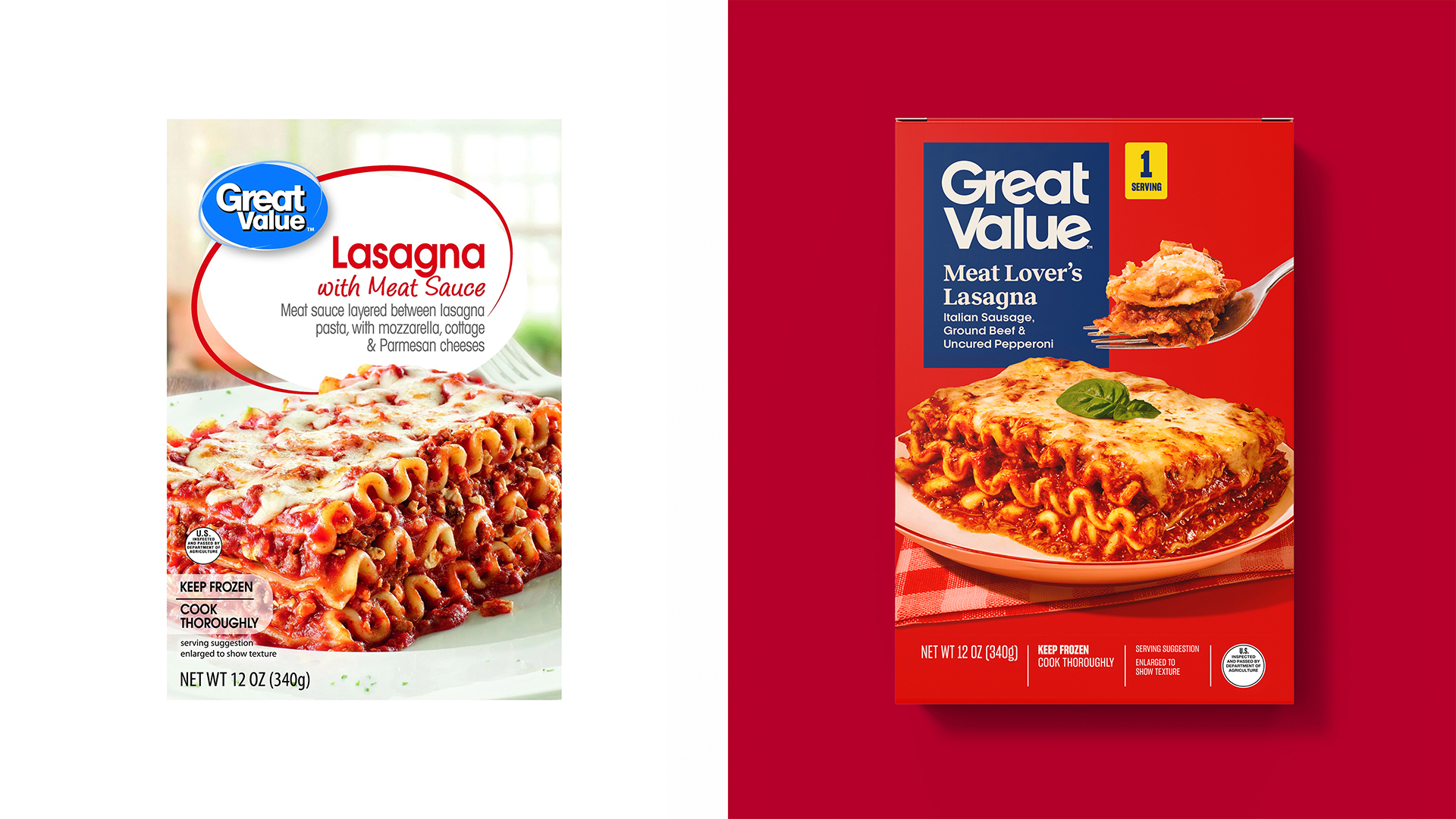
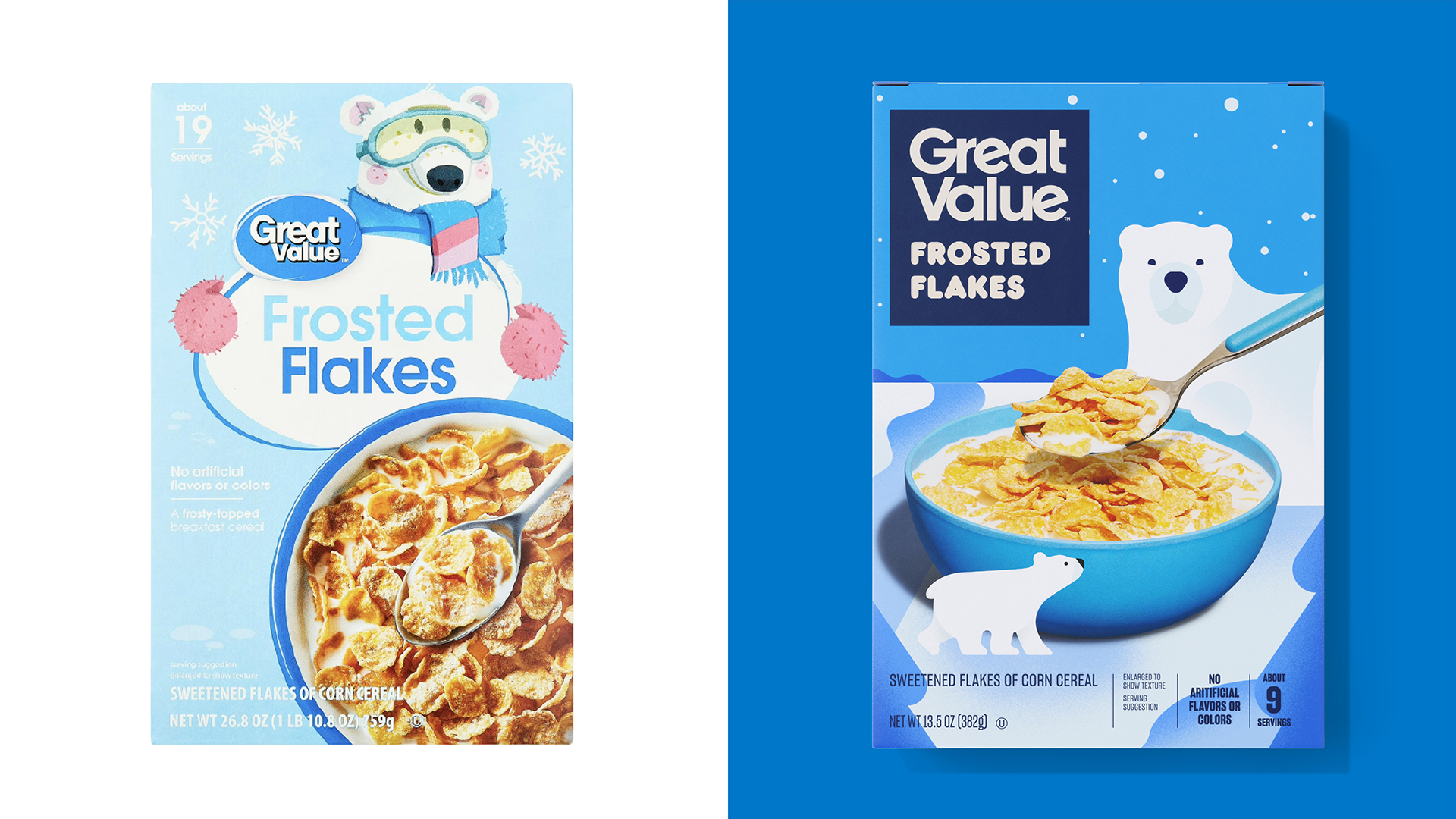
Until recently, Walmart’s Great Value behaved the same way. The decision to use the oddly generic name ‘Great Value’ is typical of private-label products, reflecting a balance between quality and price. From a design perspective, the previous brand system placed greater emphasis on the specific product and its category, and far less on the story or emotional value the brand represents.
In April 2026, Walmart announced a rebranding of its private-label, Great Value, a strategic shift that covers nearly 10,000 products across various categories.
In most cases, private-labels behave like non-brands or functional brands, because they lean on their parent brand for perceived quality, perceived value, and differentiation. In many cases, a private-label brand won’t even have an independent name; it is simply named after the parent brand. Moreover, it’s rare to find a private-label with its own independent brand strategy (such as a brand story or brand idea that stands apart from the parent), and accordingly, a distinct design concept or brand experience.
Until recently, Walmart’s Great Value behaved the same way. The decision to use the oddly generic name ‘Great Value’ is typical of private-label products, reflecting a balance between quality and price. From a design perspective, the previous brand system placed greater emphasis on the specific product and its category, and far less on the story or emotional value the brand represents.

In April 2026, Walmart announced a rebranding of its private-label, Great Value, a strategic shift that covers nearly 10,000 products across various categories.
In most cases, private-labels behave like non-brands or functional brands, because they lean on their parent brand for perceived quality, perceived value, and differentiation. In many cases, a private-label brand won’t even have an independent name; it is simply named after the parent brand. Moreover, it’s rare to find a private-label with its own independent brand strategy (such as a brand story or brand idea that stands apart from the parent), and accordingly, a distinct design concept or brand experience.
Until recently, Walmart’s Great Value behaved the same way. The decision to use the oddly generic name ‘Great Value’ is typical of private-label products, reflecting a balance between quality and price. From a design perspective, the previous brand system placed greater emphasis on the specific product and its category, and far less on the story or emotional value the brand represents.
In April 2026, Walmart announced a rebranding of its private-label, Great Value, a strategic shift that covers nearly 10,000 products across various categories.
In most cases, private-labels behave like non-brands or functional brands, because they lean on their parent brand for perceived quality, perceived value, and differentiation. In many cases, a private-label brand won’t even have an independent name; it is simply named after the parent brand. Moreover, it’s rare to find a private-label with its own independent brand strategy (such as a brand story or brand idea that stands apart from the parent), and accordingly, a distinct design concept or brand experience.
Until recently, Walmart’s Great Value behaved the same way. The decision to use the oddly generic name ‘Great Value’ is typical of private-label products, reflecting a balance between quality and price. From a design perspective, the previous brand system placed greater emphasis on the specific product and its category, and far less on the story or emotional value the brand represents.

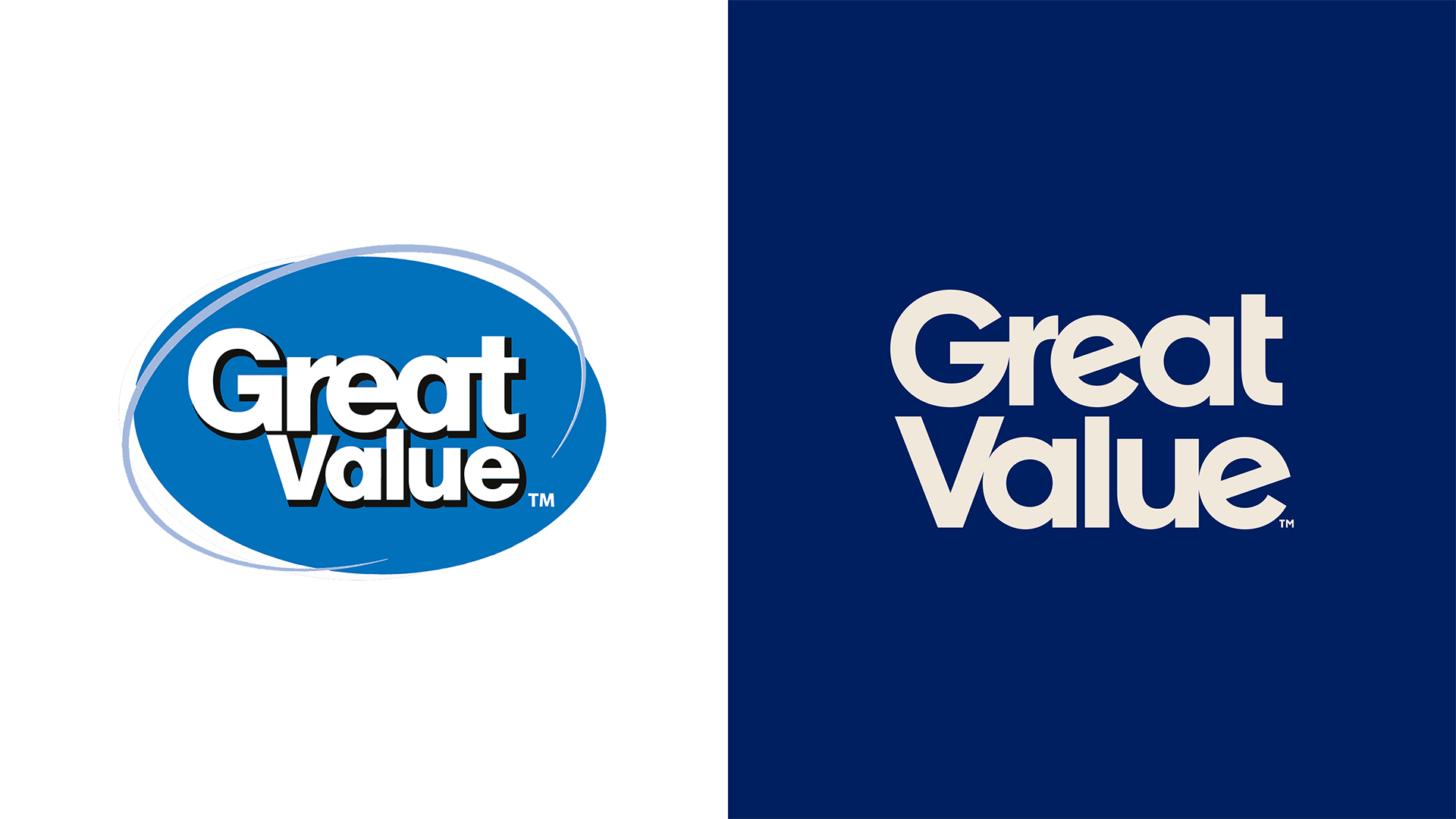
In fact, despite Great Value being one of the largest food and consumer goods brands in the US, found in 9 out of every 10 American households, until the rebrand, the name that expressed its consumer value and the reason to choose it was the least prominent and meaningful element in its old brand and design system.
Then, the branding team decided to flip the script and make a significant shift in brand hierarchy. This design change gives far more weight and respect to the brand name itself, celebrating and taking pride in the brand’s identity, its promise to shoppers, and the core idea on which the private label is built.
In simple terms: no more generic Walmart private-label pancakes. From now on, the American family will choose Great Value pancakes for their high quality and low price. In the new brand hierarchy, every product is first and foremost Great Value, and that is its clear value to shoppers and also the reason to choose it, again and again.
In fact, despite Great Value being one of the largest food and consumer goods brands in the US, found in 9 out of every 10 American households, until the rebrand, the name that expressed its consumer value and the reason to choose it was the least prominent and meaningful element in its old brand and design system.
Then, the branding team decided to flip the script and make a significant shift in brand hierarchy. This design change gives far more weight and respect to the brand name itself, celebrating and taking pride in the brand’s identity, its promise to shoppers, and the core idea on which the private label is built.
In simple terms: no more generic Walmart private-label pancakes. From now on, the American family will choose Great Value pancakes for their high quality and low price. In the new brand hierarchy, every product is first and foremost Great Value, and that is its clear value to shoppers and also the reason to choose it, again and again.
In fact, despite Great Value being one of the largest food and consumer goods brands in the US, found in 9 out of every 10 American households, until the rebrand, the name that expressed its consumer value and the reason to choose it was the least prominent and meaningful element in its old brand and design system.
Then, the branding team decided to flip the script and make a significant shift in brand hierarchy. This design change gives far more weight and respect to the brand name itself, celebrating and taking pride in the brand’s identity, its promise to shoppers, and the core idea on which the private label is built.
In simple terms: no more generic Walmart private-label pancakes. From now on, the American family will choose Great Value pancakes for their high quality and low price. In the new brand hierarchy, every product is first and foremost Great Value, and that is its clear value to shoppers and also the reason to choose it, again and again.
In fact, despite Great Value being one of the largest food and consumer goods brands in the US, found in 9 out of every 10 American households, until the rebrand, the name that expressed its consumer value and the reason to choose it was the least prominent and meaningful element in its old brand and design system.
Then, the branding team decided to flip the script and make a significant shift in brand hierarchy. This design change gives far more weight and respect to the brand name itself, celebrating and taking pride in the brand’s identity, its promise to shoppers, and the core idea on which the private label is built.
In simple terms: no more generic Walmart private-label pancakes. From now on, the American family will choose Great Value pancakes for their high quality and low price. In the new brand hierarchy, every product is first and foremost Great Value, and that is its clear value to shoppers and also the reason to choose it, again and again.
There’s no sophisticated emotional story here, no real product differentiation, no exceptional brand or design concept, but there is a clear identity and a value that any shopper (American, Israeli, or anywhere in the world) would be happy to receive.
The shift in brand hierarchy closes the gap between the old, worn-out brand system and its strong brand position in the US, a position that Walmart’s team recognized was worth carrying with pride.
The hierarchical change is naturally supported by a modern design system that maintains product clarity and functionality, while creating consistent brand presence, standout visibility, and recognition at the point of sale and beyond.
There’s no sophisticated emotional story here, no real product differentiation, no exceptional brand or design concept, but there is a clear identity and a value that any shopper (American, Israeli, or anywhere in the world) would be happy to receive.
The shift in brand hierarchy closes the gap between the old, worn-out brand system and its strong brand position in the US, a position that Walmart’s team recognized was worth carrying with pride.
The hierarchical change is naturally supported by a modern design system that maintains product clarity and functionality, while creating consistent brand presence, standout visibility, and recognition at the point of sale and beyond.
There’s no sophisticated emotional story here, no real product differentiation, no exceptional brand or design concept, but there is a clear identity and a value that any shopper (American, Israeli, or anywhere in the world) would be happy to receive.
The shift in brand hierarchy closes the gap between the old, worn-out brand system and its strong brand position in the US, a position that Walmart’s team recognized was worth carrying with pride.
The hierarchical change is naturally supported by a modern design system that maintains product clarity and functionality, while creating consistent brand presence, standout visibility, and recognition at the point of sale and beyond.
There’s no sophisticated emotional story here, no real product differentiation, no exceptional brand or design concept, but there is a clear identity and a value that any shopper (American, Israeli, or anywhere in the world) would be happy to receive.
The shift in brand hierarchy closes the gap between the old, worn-out brand system and its strong brand position in the US, a position that Walmart’s team recognized was worth carrying with pride.
The hierarchical change is naturally supported by a modern design system that maintains product clarity and functionality, while creating consistent brand presence, standout visibility, and recognition at the point of sale and beyond.

It's true, not every brand name is a self-explanatory promise, and the brand name isn’t always the most important tool in the overall brand system. And, Great Value is not the sexiest or most distinctive brand name.
But to me, this is a very good example of using a brand name more correctly and precisely, giving it (rightly) a role facing the shopper, and making it function as a real brand asset that creates identity. An identity that fits and aligns the brand with its current position in the US market.
It's true, not every brand name is a self-explanatory promise, and the brand name isn’t always the most important tool in the overall brand system. And, Great Value is not the sexiest or most distinctive brand name.
But to me, this is a very good example of using a brand name more correctly and precisely, giving it (rightly) a role facing the shopper, and making it function as a real brand asset that creates identity. An identity that fits and aligns the brand with its current position in the US market.
It's true, not every brand name is a self-explanatory promise, and the brand name isn’t always the most important tool in the overall brand system. And, Great Value is not the sexiest or most distinctive brand name.
But to me, this is a very good example of using a brand name more correctly and precisely, giving it (rightly) a role facing the shopper, and making it function as a real brand asset that creates identity. An identity that fits and aligns the brand with its current position in the US market.
It's true, not every brand name is a self-explanatory promise, and the brand name isn’t always the most important tool in the overall brand system. And, Great Value is not the sexiest or most distinctive brand name.
But to me, this is a very good example of using a brand name more correctly and precisely, giving it (rightly) a role facing the shopper, and making it function as a real brand asset that creates identity. An identity that fits and aligns the brand with its current position in the US market.





s